
The Screening Report
2025 October 19th

Why am I only posting about once a month now? Does this mean that I’m totally healed of cancer and no longer am thinking about it, or have anything to say? No, much as I might wish otherwise, that’s really not true. I think about having cancer constantly, and frankly I talk about it more often than I like because it’s really hard to not do so. I suspect this is true of any cancer survivor. I’ve learned that when you meet anybody else who has walked this same path you almost inevitably have the “how was yours” conversation, which is actually quite therapeutic. It’s assuring to know that somebody else has been through similar worries, similar discomfort, similar fear, and a similar recovery path. That is I suppose how support groups work.
I did, jointly with a colleague who is a breast cancer survivor, contact HR at the university about tying to contact other people who have similar experiences around Cranfield and forming a support group of some sort - even if it’s just a monthly hour of coffee and war stories. That sadly seems to have fallen into the “too difficult” camp for now, mostly I think because they’re in the middle of a pretty horrendous restructuring right now (read: redundancies). Thankfully that seems to be passing me over, but not all of my friends and colleagues, although there’s an element of procedurality about it too. I’m sure we’ll find a way to do it, but it might take a while.
No, the reason I’m not posting so much is that I’m, after a fashion, piecing my life back together. Going to meetings, restarted work on several books I was busy writing before I got diagnosed (any agents out there interested in taking on a series of aviation centred adventure novels?), working on a bunch of work and charity projects, running a slowly increasing rate. I am aware that I’m still exploring what my capacity is, as I really don’t know, and not always finding the right balance. So posting my thoughts on Substack is a casualty.
However, there’s something I really do want to talk about, which is the new report just presented to parliament by Prostate Cancer Research. If you’re not seen it, here’s the link: https://www.prostate-cancer-research.org.uk/screening-report/ .
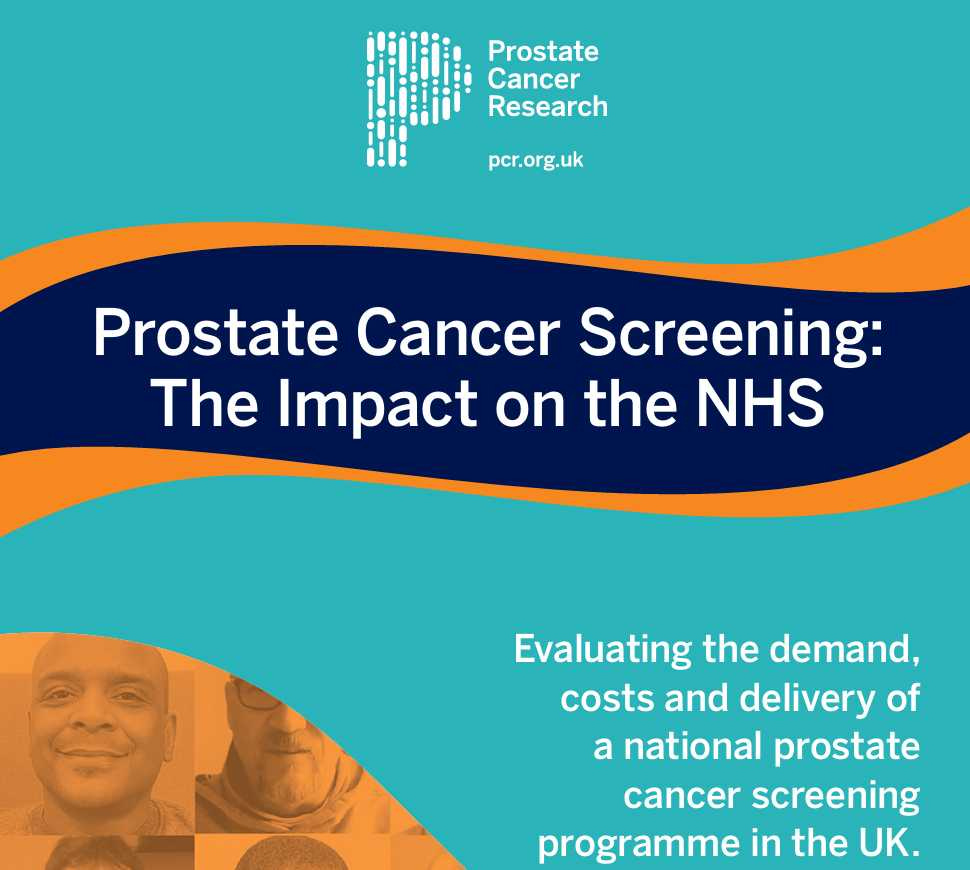
It was presented by a team that included former Prime Minister Rishi Sunak, and current Deputy Prime Minister David Lammy, as well as a bunch of very clever and motivated people from the charity and medical sectors. I’ve read the report so you don’t have to (although it’s worth it), and I’ll tell you - it’s a brilliant piece of work. What it does is show, with a lot of evidence that a targeted screening programme is extremely affordable, so much so that the case for doing it is almost inarguable. The specifics are a bit complex, but basically they’re arguing for:-
- Screening that uses a combination of PSA testing, MRI scans and biopsies
- Targeted at two groups of people: black men aged 45-69, and all men in the same age group with a family history of prostate cancer in men, or related cancers in women.
They break down the costs, show how many new people of what professions in the NHS need to be trained and qualified to support it, and overall show something really worthwhile, affordable, and achievable. Whilst I’m not a medic, I am a scientist and can absolutely see what was done here and it is really really impressive.
—
It’s clear that the team behind this report don’t want to stop at that position. They want to screen all men from 50-69 as well, and to expand screening as the technologies come online to include an expanding range of ways of detecting prostate cancer including AI, and several new blood tests that are being evaluated at the moment.
—
On some levels, I really don’t want to agree with this report, for the very emotive reason that under the proposed initial testing regime I would never have been tested. I would still not have had my own cancer picked up until it was nearly too late, and maybe not at-all. But, it is absolutely right that the methods and groups that it wants to target are those whose lives are most likely to be improved and saved - I was an outlier and not in the same bracket.
So I really hope that our MPs listened to this, and who knows, a few of these busy folks, might even read this report past the too-brief executive summary…
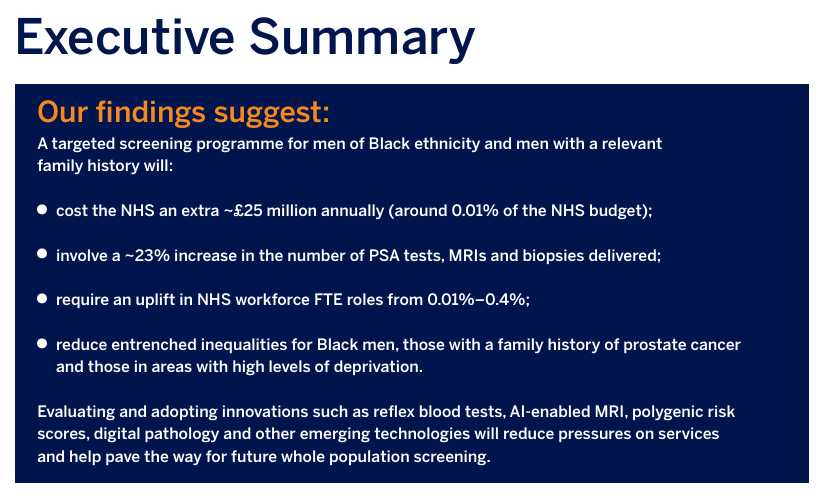
It is clear that the intention is not to stop at this initial introduction. It is to start there, and as quickly as possible expand the testing regime both into more people, and better technologies. And clearly the fact that this targeted regime exists will help encourage others to get screened as well - perhaps somebody else like me at, or even before their 50th birthday.
So well done to everybody who was involved in this brilliant piece of work. It absolutely deserves to succeed, and if the job is done right won’t be an end point, it’ll be a starting point.
It is great to see some movement forward for this screening approach....likewise, I would not have been picked up in this group, however, baby steps!