
Professoring
2025 November 7th

2025 11 07 Professoring
If you’ve had serious, life-saving medical treatment: for example major cancer treatment, somebody behind all that probably had the title of “Professor”. If you studied at University, whether that was medicine, like the physicians treating us, engineering like me, or pretty much anything else - then also at the top of the tree was somebody called “Professor”. When I was an undergraduate at Southampton University back when Pontius was still a Pilot, our head of department was Professor Robin East, a slightly severe, but ultimately incredibly knowledgeable and supportive figure who I always enjoyed interacting with and learning from. But did you ever wonder just what that means.
There are several ways to define the meaning and role of a professor. Once upon a time it was basically anybody who taught in any of the world’s tiny number of universities, and the title came because they “professed” their knowledge. Then universities multiplied and became larger, they became the most senior academics and various additional grades of academic were appointed beneath them. This is still by and large the case, although internationally there are two main scales. In Britain we have…
Lecturer —> Senior Lecturer —> Reader —> Professor.
Whilst our American colleagues, often copied around the world and this is actually also taking hold in Britain have a different scale:-
Assistant Professor —> Associate Professor —> Professor.
Ignoring the fairly trivial point that American universities have three grades to cover the British four, the main point is that a Professor has reached a point of distinguished conduct in their personal knowledge, their research, and their ability (usually, not always) to teach their subject. In medicine this has become particularly closely linked with clinical practice, so many of the most distinguished clinicians are also actively involved in researching new and improved medical treatments, and equally involved in training the next generations of medical professionals - and quite right too. Hence my medical treatment has been led by Professor Peter Hoskins at Mount Vernon Cancer Centre, for which I am very grateful - looking him up, he is clearly one of the thought leaders in the UK in best practices in cancer treatment, and I’m fortunate to be treated by such a man.
Fiction has provided us as well with some great Professors - here are a few of my favourites, in their chroniclers words. These are from a favourite author of my childhood, Norman Hunter:-
Professor Branestawm, like all great men, had simple tastes. He wore simple trousers with two simple legs. His coat was simply fastened with safety pins because the buttons had simply fallen off. His head was simply bald, and it simply shone like anything when the light caught it.
It was a wonderful head was the Professor’s. He had a high forehead to make room for all the pairs of glasses he wore. A pair for reading by. A pair for writing by. A pair for out of doors. A pair for looking at you over the top of and another pair to look for the others when he mislaid them, which was often. For although the Professor was so clever, or perhaps because he was so clever, he was very absentminded. He was so busy thinking of wonderful things like new diseases or new moons that he simply hadn’t time to think of ordinary things like old spectacles.

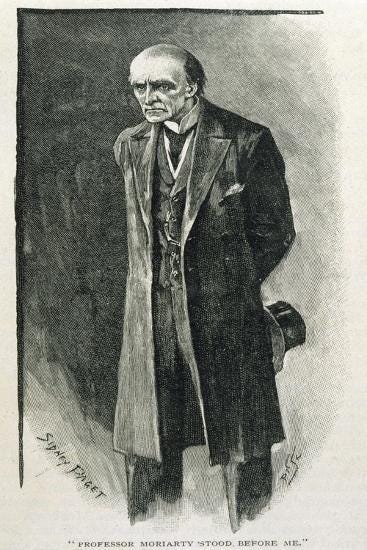
Or for a less wholesome Professor, we can have one from Sir Arthur Conan Doyle…
He is the Napoleon of crime, Watson. He is the organizer of half that is evil and of nearly all that is undetected in this great city. He is a genius, a philosopher, an abstract thinker. He has a brain of the first order. He sits motionless, like a spider in the centre of its web, but that web has a thousand radiations, and he knows well every quiver of each of them. He does little himself. He only plans. But his agents are numerous and splendidly organized. Is there a crime to be done, a paper to be abstracted, we will say, a house to be rifled, a man to be removed—the word is passed to the Professor, the matter is organized and carried out. The agent may be caught. In that case money is found for his bail or his defence. But the central power which uses the agent is never caught—never so much as suspected. This was the organization which I deduced, Watson, and which I devoted my whole energy to exposing and breaking up.
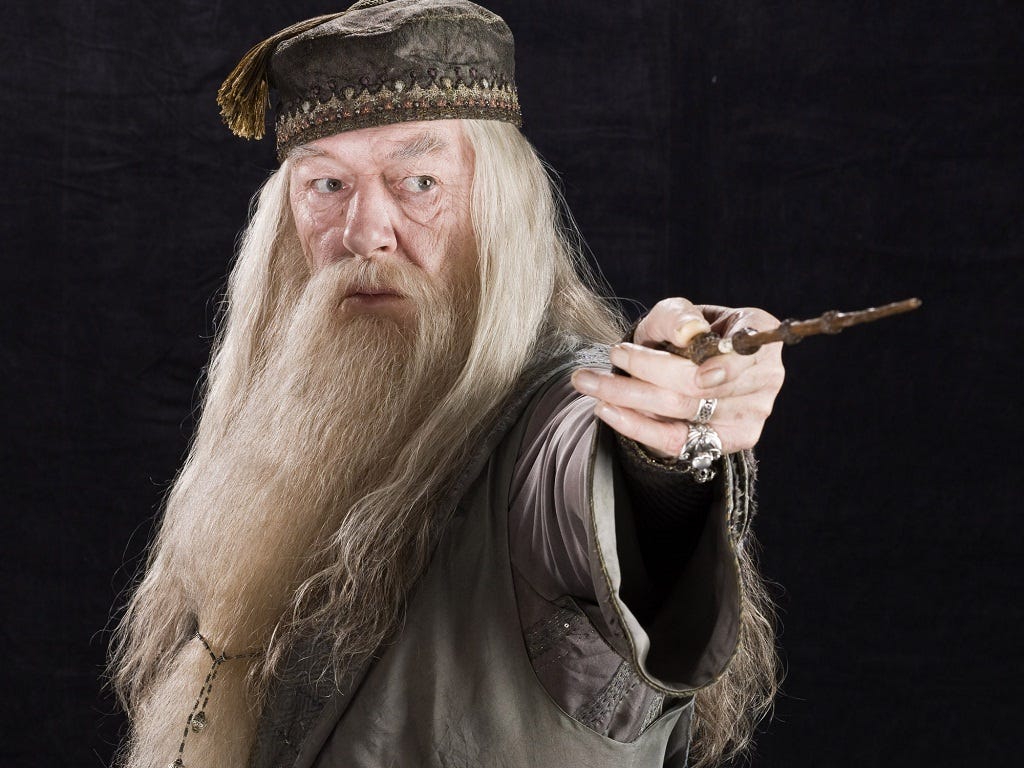
If your tastes in literature are more recent, of course you can go to JK Rowling…
Nothing like this man had ever been seen on Privet Drive. He was tall, thin, and very old, judging by the silver of his hair and beard, which were both long enough to tuck into his belt. He was wearing long robes, a purple cloak that swept the ground, and high-heeled, buckled boots. His blue eyes were light, bright, and sparkling behind half-moon spectacles and his nose was very long and crooked, as though it had been broken at least twice. This man’s name was Albus Dumbledore.
So why am I rambling on about professors, real and fictional? Well, once upon a time I had the title of Professor - I was at the time Head of Airborne Science at the National Centre for Atmospheric Science, and Cranfield University, where we were based, granted me the role and title of Visiting Professor. Basically it meant that they wanted to keep me onside, but weren’t actually paying me anything. Our Head Office decided to make me redundant in 2019, leading by a slightly circuitous route to my coming over to Cranfield to work properly, but not as a Professor - I was firstly an internal consultant on a fixed term contract, then I took a permanent role as Associate Professor of Aviation and the Environment. (Don’t feel sorry for me, it actually came with a significant payrise compared to what I’d had at NCAS.) That’s a job I’ve thoroughly enjoyed for the last five years or so, and hopefully done some good. But I’d decided in the middle of 2024 I was going to bite the bullet and put my application together to full Professor. That was coming along slowly, but in what I hoped was the right timescale, when almost exactly a year ago I received my diagnosis of stage 4 prostate cancer.
Clearly, like anybody with any sense, I prioritised my cancer treatment - but I also decided that I was NOT going to be derailed from this particular ambition. So whilst going through chemotherapy, I slowly and painfully put together my application: covering the papers I’d published, the PhD students I’d supervised, the small amount of teaching I’d done, and (very important these days) how much my work had changed the world, and how much money I’d brought into the university. That went in in March. Then early in June, just after finishing radiotherapy, I was interviewed by a board chaired by Professor Dame Karen Holford, Cranfield’s Vice Chancellor (the head of the university in other words), and the following day got a call from her Deputy, Professor Dame Helen Atkinson giving me the good news that I’d passed - but telling me to keep it quiet for a while.
Six weeks later the bombshell hit - a letter from HR saying that my promotion would be effective on August 1st, or when I became a Fellow of the Higher Education Academy - something I’d not pursued because the university hadn’t run the process for it for over a a year, I’d been really rather busy with my cancer treatment, and frankly I hardly did any teaching - my job was all about research. Putting myself under a lot of stress though, I dropped as much as I could and threw all my efforts into getting the elusive FHEA.
Well, two weeks ago, I had my final oral interview for it, and the same day passed and was appointed a fellow of Advance Higher Education (same thing, it’s a bit confused over its own name). The same day, my promotion was effective.
I thus present myself as Professor Guy Gratton PhD FRAeS FIMechE FSFTE FHEA AFSETP.
And still, Guy with Cancer. I’ll also continue to try and uphold the standards of bow-tie wearing, tweed jacketed, professorial eccentricity for which the profession is famed, and aim to keep making the world a better place through it.
I couldn’t be more happier for you. What a journey.
An aside - Australia (Macquarie Uni 30 years ago) Lecturer - Senior Lecturer - Assistant Professor - Professor.
There is one “higher” - Emeritus Professor (it’s a “job” title but an award for academic excellence over a long time).
Congratulations, good sir! Putting together a promotion packet is as arduous and time-consuming as writing a full article from start to finish. I do imagine you welcomed the opportunity to work on it, and to think about other things besides cancer.